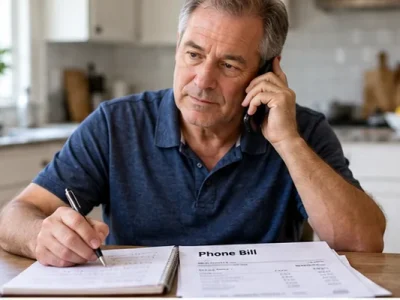
You can learn how to lower your electric bill without buying anything by changing a few habits.
The biggest savings hide in three places most people never touch: the thermostat, the water heater, and standby power.
Read to the end and you will have a seven-step routine you can start tonight with no purchase.
Where your electricity money goes and what to change first
The fastest way to lower your electric bill is to target heating, cooling, water heating, and standby power first, because those categories use the most energy in a typical home. Lighting and small electronics come after, and habits beat purchases in every category.
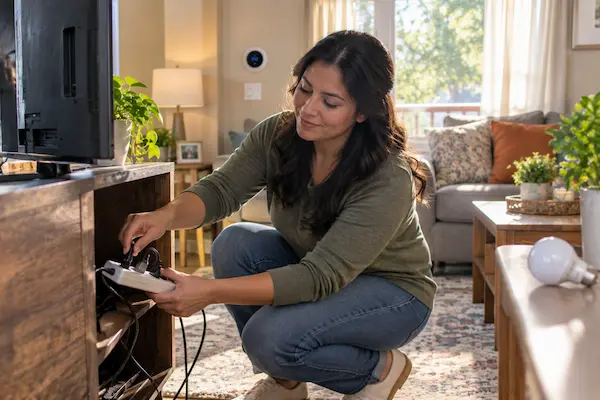
The U.S. Department of Energy (DOE) says water heating accounts for about 18% of a home’s energy use and is typically the second largest energy expense. DOE also states that lighting accounts for around 15% of an average home’s electricity use. Standby power, the energy pulled by devices that are “off” but still plugged in, accounts for 5 percent to 10 percent of residential energy use, according to DOE, and can cost the average household as much as $100 per year.
Here is how those categories compare and what a zero-cost fix looks like for each one.
| Where energy goes | Zero-cost fix |
|---|---|
| Heating and cooling | Set back the thermostat when away or asleep |
| Water heating (about 18%) | Lower the tank temperature, shorter showers |
| Lighting (around 15%) | Turn lights off, use daylight |
| Standby power (5% to 10%) | Unplug idle chargers, TVs, consoles |
| Laundry and dishes | Full loads, cold water, air dry |
The percentages above are national averages from DOE, so your home may differ. The point is the order: start with the big categories, and the savings show up on the next bill. What does that look like in real life? The next section walks through it.
What changes in your month when you reduce your electricity bill
Cutting the categories above turns a bill you dread into a bill you can predict, and the change takes one billing cycle to show. Nothing about it requires new equipment.
Illustrative example: a family of four keeps the thermostat at one setting all day, runs the water heater on the factory setting, and leaves two TVs, a console, and six chargers plugged in around the clock. The bill is always higher than they expect.
After the changes, the thermostat drops several degrees while the house is empty, the water heater runs cooler, and one power strip switches off the living room electronics at night. Nothing was bought, and the next bill reflects the difference. The bridge between those two months is a checklist, not a purchase.
The ENERGY STAR program, run by the U.S. Environmental Protection Agency and DOE, says homeowners can save about $180 a year by properly setting their programmable thermostats and keeping those settings. If your thermostat is already programmable, that saving is a matter of pressing buttons you already own.
⚠️ Attention: do not crank the thermostat far past your target to “heat faster.” Most systems heat or cool at one speed, so a big jump just runs the system longer and costs more.
Now let’s go room by room, because the habits that matter in the kitchen are not the ones that matter in the bathroom.
Lower electric bill tips room by room
Each room has one or two habits that move the bill, and none of them cost money. Here is the short list, in order of impact.
Thermostat and hallway. ENERGY STAR recommends a setback of about 8 degrees in winter and a set-up of about 7 degrees in summer while the home is empty for long periods, and about 4 degrees while you sleep. Its sample schedule uses 70°F for heating and 78°F for cooling while you are home and awake. Keep curtains open on sunny winter days and closed on hot summer afternoons.
Bathroom. Water heating is about 18% of home energy use, so shorter showers and fixing a dripping hot tap matter more than most people think. DOE lists turning down the thermostat on your water heater as one of the main strategies to reduce water heating bills. Check the manual for the recommended setting before changing it.
Laundry room. Wash full loads, choose cold water for everyday clothes, and clean the dryer lint filter before every cycle so the machine finishes faster. On dry days, hang clothes instead of using the dryer at all.
Kitchen. Run the dishwasher only when full and let dishes air dry instead of using the heated-dry setting. Keep the refrigerator door seals clean and use lids on pots so water boils faster.
Living room and bedrooms. Standby power is the quiet one. DOE puts it at 5 percent to 10 percent of residential energy use. Plug the TV, sound bar, and console into one power strip and switch it off at night. Turn lights off when you leave, since DOE says lighting is around 15% of home electricity use. If you already have LED bulbs, keep using them: DOE states that LEDs use up to 90% less energy than traditional incandescent bulbs.
These habits work best as a routine, so the next section turns them into a numbered plan you can follow in one evening.
How to lower your electric bill step by step
You need nothing more than your last electric bill, 30 minutes, and the willingness to walk through your home once. Grab the bill first so you have a number to beat.
- 1Read your bill and find the kilowatt-hours (kWh) used and the price per kWh. That number is the scoreboard for the next month.
- 2Program the thermostat using the ENERGY STAR pattern: about 8 degrees lower in winter (or 7 degrees higher in summer) while you are out, and about 4 degrees while you sleep.
- 3Turn down the water heater to the setting your manufacturer recommends, and check that no hot tap drips.
- 4Hunt standby power room by room: unplug chargers with nothing attached, and group entertainment devices on one strip you can switch off.
- 5Change laundry and dish habits to full loads, cold washes, air drying, and a clean lint filter every time.
- 6Use daylight and switch off lights in empty rooms; make it a house rule that the last person out turns the light off.
- 7Compare next month’s bill with the kWh figure from step 1, and keep the habits that made the biggest difference.
Common mistakes: turning the water heater so low that showers feel cold, unplugging a medical device by accident when clearing power strips, and giving up after one week because the bill has not arrived yet. Savings show up on the next full billing cycle. If the bill still feels too high after a month, ask your utility about a free energy audit or budget billing.
Frequently asked questions about ways to save on electricity
Does unplugging things really reduce your electricity bill?
Yes, a little. DOE says standby power accounts for 5 percent to 10 percent of residential energy use and could cost the average household as much as $100 per year. Focus on TVs, consoles, sound systems, and chargers, not on appliances that need to stay on.
What temperature should I set my thermostat to save money?
ENERGY STAR’s sample schedule uses 70°F for heating and 78°F for cooling while you are home and awake, with a setback of about 8 degrees in winter or a set-up of about 7 degrees in summer when the house is empty. Adjust to what your family can live with.
Which uses more electricity, the water heater or the lights?
Usually the water heater. DOE reports water heating at about 18% of home energy use and lighting at around 15% of home electricity use. Shorter showers and a lower tank setting move the bill more than one forgotten light.
Is it cheaper to leave the AC on all day or turn it off?
Raising the temperature while you are out, rather than switching the system off completely, is the approach ENERGY STAR describes. A set-up of about 7 degrees during the day cuts run time without letting the house get so hot that cooling it down takes hours.
Are there lower electric bill tips for renters who cannot change the thermostat?
Yes. Renters can still control standby power, laundry and dish habits, lighting, shower length, and window coverings. If the water heater is inside the unit, you can usually adjust its setting; if it is shared, ask the landlord.
What if I cannot afford my electric bill even after cutting back?
Call your utility before the due date and ask about payment plans, budget billing, or hardship programs. Many states also run energy assistance programs for eligible low-income households through the U.S. Department of Health and Human Services; rules and amounts vary by state and year.
How this site helps you with household bills
We cover the practical side of household costs: how to lower recurring bills, which government programs may help when money is tight, and how to tell a real program from a scam. This article is part of the Social Programs section, where energy costs sit next to phone discounts, food benefits, and other everyday supports.
We prefer advice that costs nothing first. Most readers want a smaller bill next month, not after a purchase they cannot afford. That is why every tip here is a habit, a setting, or a phone call to your utility.
✅ How we checked this information: the energy-use percentages (water heating, lighting, standby power) and the LED figure come from the U.S. Department of Energy’s Energy Saver pages. The thermostat schedule and the annual savings estimate come from the ENERGY STAR program page on programmable thermostats. Your results depend on your home, climate, and utility rates.
When a number changes, such as a utility rate or a state assistance program, the official source wins.
Start cutting your electric bill tonight
You came here to lower your electric bill without buying anything, and you now have the order that works: thermostat, water heater, standby power, laundry and dishes, lighting. Every step is free.
Tonight, program the thermostat and switch off one power strip. This weekend, check the water heater setting and clean the dryer filter. Then watch the next bill. When you are ready, explore our other Social Programs guides to see whether an energy assistance program or a utility hardship plan could help your household too.
ℹ️ Important: en.amucc.com.br is an independent informational site, not affiliated with any government agency or company mentioned, including the U.S. Department of Energy, ENERGY STAR, or any utility. Savings vary by home and are not guaranteed. Confirm settings with your equipment manual and rates with your utility.