The Lifeline Program helps low-income Americans get a discount on phone service every month. With the right provider, you can use that benefit to get an iPhone 15 Pro at little or no upfront cost. This guide shows you exactly who qualifies and how to apply step by step.
Across the United States, a free smartphone through the federal Lifeline benefit is available to millions of households that get by on little.
Looking for the real way to get an iPhone 15 Pro through the Lifeline Program? Every stage is laid out below, in order.
Lifeline, from the basics
Enrolled homes see a smaller phone or internet bill month after month. The standard cut is $9.25, and on certain tribal lands it reaches $34.25 per month.
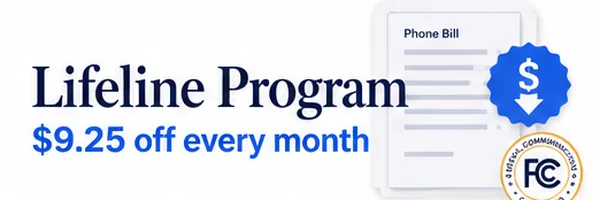
The FCC (Federal Communications Commission), which regulates communications nationwide, administers the benefit. Launched in 1985, it has helped tens of millions of families stay in touch, on the principle that a tight budget should never cut anyone off.
A single rule governs everything: one Lifeline benefit per household. Two people living together cannot each claim a discount of their own.
Is an iPhone 15 Pro through Lifeline a real possibility
It is the first thing everyone wants to know, and the frank answer depends on which carrier you choose.
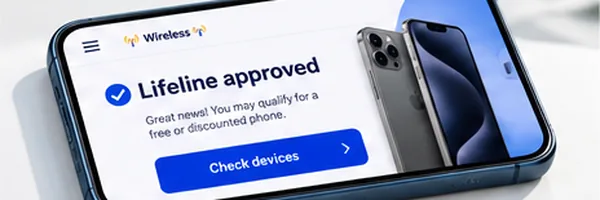
Lifeline does not ship phones. You get a monthly credit, you use it at a participating carrier, and some carriers add a free or very cheap smartphone to their Lifeline plans. The government covers part of the bill; the company picks the hardware.
As a premium handset, the iPhone 15 Pro rarely shows up where basic Android models are the norm. Yet a few providers, often those connected with the ACP (Affordable Connectivity Program) or with promotions of their own, have placed stronger devices in approved customers’ hands for next to nothing.
Getting a premium phone such as the iPhone 15 Pro usually takes one of these moves:
- Pairing Lifeline with a second government assistance program
- Spotting a carrier whose current campaign includes that model
- Moving without delay, since premium stock is small and changes fast
Attention: No federal program promises an iPhone 15 Pro by name. What is on offer shifts with the carrier, your area and the stock on hand, so confirm with the provider before you apply.
Who the Lifeline Program accepts
Approval comes down one of two paths: household earnings, or membership in a qualifying government program.
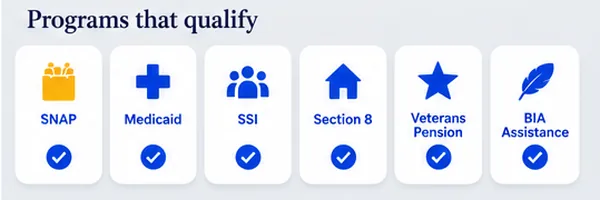
By income: everything the household earns must land at 135% of the Federal Poverty Guidelines or under. A single adult is looking at about $20,331 a year under the current table, with a higher cap for a family of four.
By program: being enrolled in any benefit listed here qualifies you automatically.
The documents to prepare
Collect these before you open the form. A complete set saves time and keeps the application from being sent back.
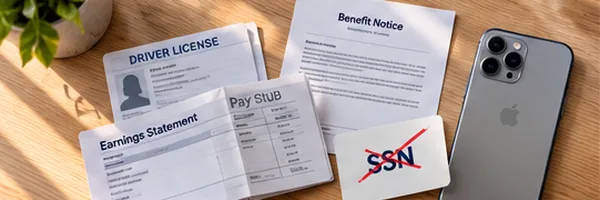
- A government photo ID: passport, state ID or driver’s license
- Income proof for that route: tax return, pay stub or employer letter
- On the program route, the benefit or approval letter you received
- A Tribal ID number, or else your Social Security Number
- Where you live today
You need not be a citizen, though legal residency is required. Non-citizens who meet the rules get approved with the proper paperwork. Keep copies of everything, because the same documents tend to come up again at renewal.
Lifeline application, stage by stage
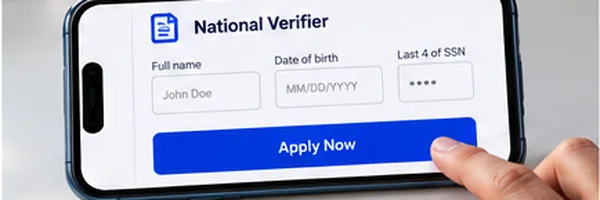
The National Verifier, the federal system that confirms eligibility, is the quickest route, and it works online. This is the sequence.
1Open the official site
Go to lifelinesupport.org, the Lifeline page maintained by the U.S. government. Any other page presenting itself as the official portal should be ignored.
2Register an account
Select “Apply Now” and open a free account with your email address. Through that login you can watch how the request is progressing.
3Enter your personal details
Type in your legal name, when you were born, where you live, and four digits from the end of your Social Security Number. That is what the system uses to confirm your identity.
4Send proof that you qualify
Upload a sharp photo or scan of the qualifying document. On SNAP or Medicaid, use the benefit letter; on the income route, a recent pay stub or tax return.
5Wait for the answer
The decision is usually immediate. Some cases take up to 7 business days, and the confirmation always arrives by email.
6Pick a carrier and a phone
With approval in hand, go to a participating Lifeline carrier and present it. Find out precisely which handsets are on the shelf and if the iPhone 15 Pro, or any other premium model, is attached to a current deal.
Why getting an iPhone 15 Pro through Lifeline makes sense
- You save up to $9.25 per month on your phone bill through the federal Lifeline discount, and residents on Tribal lands can save up to $34.25 per month.
- Some Lifeline-approved carriers like SafeLink Wireless and AirTalk Wireless offer an iPhone 15 Pro at reduced cost or through an installment plan, so you do not need to pay the full retail price of around $999 all at once.
- You keep your existing phone number when you switch to a Lifeline carrier, so you do not lose contact with family, your employer, or medical providers.
- Lifeline-approved plans include talk, text, and data, meaning the iPhone 15 Pro you receive is fully functional for calls, job searches, government apps, and everyday use.
- Approval is based on income or program participation, not on your credit score, so even people with no credit history can qualify.
Carriers that supply Lifeline phones
Carriers in the Lifeline Program operate all over the country, each with its own set of phones and plans. These are the names that come up most, and the data allowance deserves as much attention as the device.
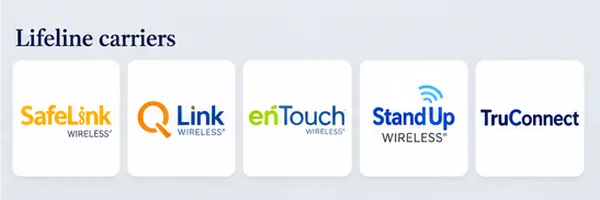
No carrier on this list guarantees the iPhone 15 Pro in stock. After approval, call them or open their website and ask about the device promotions running that week, because the lineup shifts constantly.
The phones Lifeline really provides
Most Lifeline phones are entry-level or mid-range Android devices. Depending on carrier and state, you will usually find the Motorola Moto G series, the Samsung Galaxy A series or LG Stylo models.
High-end Apple hardware, the iPhone 15 Pro included, sits outside the regular Lifeline catalog. Even so, a few carriers stack rebates or trade-in credit on top of the benefit, and the price of a flagship iPhone drops sharply.
If that exact model is the goal, this is the approach:
- Reach out to several Lifeline carriers near you and ask about iPhone deals
- Find out whether your state has a subsidy that stacks on top of Lifeline
- Bring up trade-in programs, where your old phone cuts the price of the new one
- Consider certified refurbished iPhones, which cost far less than new
Reasons applications get denied
Many denials come from small, avoidable errors. Knowing them beforehand puts you in a far better position.
Keeping the benefit active
Approval is only the beginning. Holding on to the benefit is the second half, and many people lose it without noticing. It comes down to two habits, renewing when asked and keeping the line in use.
Once a year you must recertify. A letter or an email lands asking whether your situation is unchanged; let the date pass and the discount is gone.
The line also has to be used at least once every 30 days: a call, a text or some data. Go a full month with no activity and the provider may remove you for inactivity.
Tell the carrier whenever you move or your income changes, and keep your contact information up to date. Receiving a benefit you no longer qualify for counts as fraud and carries serious consequences.
Important: This article is independent and informational only. No carrier, program or government agency mentioned here sponsors, controls or is affiliated with it. For official details, go to the FCC or to your carrier.
Frequent questions
You qualify if your household income is at or below 135 percent of the Federal Poverty Guidelines. You also qualify if someone in your home receives SNAP, Medicaid, SSI, Federal Public Housing Assistance, or certain veterans and tribal benefits. Only one Lifeline benefit is allowed per household.
Lifeline itself covers only the monthly service discount, not the device. However, some carriers bundle the benefit with device deals or installment plans that bring the cost down significantly. You need to check directly with carriers like SafeLink Wireless or AirTalk Wireless for current iPhone 15 Pro offers, as availability changes by state.
First, go to the official site lifelinesupport.org and create an account. Second, submit proof of eligibility such as a SNAP approval letter or your last tax return showing income. Third, once approved, choose a Lifeline-certified carrier that offers iPhone 15 Pro deals in your state and complete enrollment with them directly.
The National Verifier at lifelinesupport.org usually gives you an instant decision when your information matches government records. If manual review is needed, it can take up to 7 business days. After approval, your carrier activates your service in most cases within 1 to 3 business days.
Yes. You must recertify your eligibility once a year to keep the benefit. You will also lose it if you stop qualifying for the program, if another person in your household is already receiving Lifeline, or if you do not use your service for 30 consecutive days with some carriers.
Worth applying when the iPhone 15 Pro is not guaranteed
Yes, without question. Even if the iPhone 15 Pro is out of reach today, the benefit cuts your phone bill every single month.
Month after month, the $9.25 discount builds into more than $110 a year, money you can put toward a better phone on your own terms: a trade-in, an installment plan or a certified refurbished model.
Carrier promotions also rotate. The carrier that has nothing today could feature that exact model in its next campaign, and customers already enrolled get there first.
Apply, get enrolled, then keep checking carriers for premium phone offers. That remains the most realistic path to a high-end device with federal help.