Free CNA training programs are real, and the best ones pay you to learn because a federal rule says employers cannot charge you.
This guide ranks the five types you will find and gives you the questions that separate a good deal from a trap.
Read to the end for the reimbursement rule most people never hear about.
Free CNA training programs: the five types that really exist
A certified nursing assistant (CNA) can train for free through five main routes: nursing home sponsored classes, hospital programs, state workforce grants, community college scholarships and nonprofit or Red Cross style courses with tuition help.
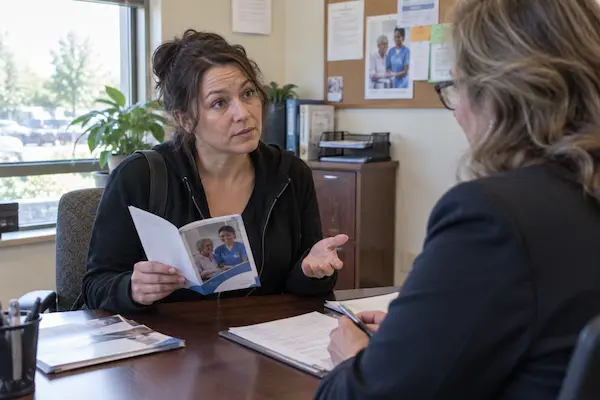
The strongest route is the nursing home, because federal rules in 42 CFR 483.152 say a nurse aide employed by, or offered a job by, a facility on the day training begins may not be charged for any portion of the program.
Every state approved program must include at least 75 clock hours of training with at least 16 hours of supervised practical training, under the same federal regulation. Many states require more. The ranking below is ordered by how likely you are to walk out with both a certificate and a job.
| Type of program | Why it ranks here |
|---|---|
| Nursing home sponsored | Free by federal rule, often paid, job waiting at the end |
| Hospital program | Free or reimbursed, larger employer, competitive entry |
| State workforce grant | Tuition covered through a workforce office, any school |
| Community college aid | Scholarships or grants cover tuition, more flexible schedule |
| Nonprofit or Red Cross | Tuition assistance in some cities, strong training reputation |
The Bureau of Labor Statistics (BLS) reports that nursing assistants held about 1.5 million jobs and that roughly 203,000 openings are projected each year over the decade, most of them from workers leaving the field. That demand is why facilities are willing to train for free. It is also why you should ask hard questions before you sign anything.
Questions to ask before you enroll in free CNA classes
Ask who pays for what, how long you must work afterward and whether the program is state approved, because “free” often means free only if you meet conditions. A program that is truly free by regulation has no tuition, no fee for the competency exam and no bill if you leave early. A program that is “free with a job” may claw back costs if you quit before a set number of months.
One more question matters if you plan to pay for a class and get hired later: does the state reimburse me? Under 42 CFR 483.152, if you complete a training program while not employed and then get hired or receive a job offer from a facility within 12 months, the state must provide for reimbursement of your costs on a pro rata basis. Ask the facility’s human resources office how to claim it. With those answers in hand, it is worth seeing what the job itself changes.
What changes after you finish a free CNA program
Finishing a state approved program and passing the competency exam puts you on your state’s nurse aide registry, which is the legal door into nursing homes, hospitals and home care agencies. The BLS reports a median annual wage for nursing assistants of about 42,000 dollars, with nursing care facilities and hospitals as the two biggest employers. The pay is entry level; the stability and the path forward are the real prize.
Illustrative example: a home health aide with no certificate joins a nursing home’s sponsored class, earns an hourly wage during the weeks of training, passes the exam and starts on the floor the following month. A year later she uses the facility’s tuition help to begin a licensed practical nurse program. None of that required paying for school up front.
⚠️ Heads up: the BLS notes that nursing assistants have one of the highest rates of injuries and illnesses of all occupations, mostly from lifting and moving patients. Ask any program how much time it spends on safe transfer techniques; a good one drills them.
The work is physical, the shifts include nights and weekends, and the first months are tiring. People who stay usually do so because the schedule fits a family, the job is everywhere, and the certificate stacks toward nursing. The steps below show how to find a program that gets you there without a surprise bill.
How to find free CNA classes near me step by step
Before you start, check your state’s nurse aide registry site for the list of approved programs and note the entry requirements, since most programs need a background check and proof of immunizations. Have a resume ready, even a short one, because facility sponsored classes are hiring decisions, not just admissions.
- 1Pull the approved program list from your state’s nurse aide registry or health department site. Any program not on that list cannot lead to certification.
- 2Call nearby nursing homes and ask for human resources. Say you are looking for a sponsored nurse aide training class and ask when the next cohort starts.
- 3Contact your local workforce office through the American Job Center network and ask about training grants for nurse aide programs.
- 4Check hospital career pages for “nursing assistant training” or “patient care technician” cohorts, which often include free training and a guaranteed interview.
- 5Ask the seven questions from the section above and get the answers by email so you have them in writing.
- 6Apply and prepare your documents: ID, Social Security card, immunization records and any prior healthcare experience. Then confirm your start date and clinical schedule.
Common mistakes: enrolling in an online only course that is not state approved, assuming the exam fee is included, and skipping the work commitment clause. If a program asks you to pay a deposit to “hold your seat” while also promising employer sponsorship, walk away; a real sponsor does not need your money.
Frequently asked questions about free CNA training
These are the questions people ask most when they search for free CNA classes.
Are there really CNA classes free with job placement?
Yes. Nursing homes and some hospitals run classes where you are hired first and trained second. Federal rule 42 CFR 483.152 bars a facility from charging a nurse aide it employs or has offered a job to for any part of the training.
How long does free CNA training take?
Federal rules require at least 75 clock hours, including 16 hours of supervised practical training, and many states require more. Most programs run from about four to twelve weeks depending on the schedule.
Do I have to work for the facility after free training?
Often, yes. Sponsored programs usually ask for a work commitment of several months. Read the agreement for what happens if you leave early; some facilities bill you for the training cost.
Can I get my CNA training costs reimbursed?
Possibly. Under 42 CFR 483.152, if you paid for training and then are hired by a facility within 12 months, the state must provide for pro rata reimbursement. Ask the facility’s HR department how to file.
What do CNAs earn?
The Bureau of Labor Statistics reports a median annual wage of about 42,000 dollars for nursing assistants, with the largest employers being nursing care facilities and hospitals. Pay varies by state and shift.
Is the Red Cross CNA class free?
Not automatically. The Red Cross and similar nonprofits charge tuition but offer scholarships or payment plans in some cities. Ask the local chapter about tuition assistance before assuming a cost.
How this site helps you compare career training
Career and education content on this site has one job: show you the paths that lead to a real credential without a surprise bill, and tell you which questions expose the ones that do not. Nurse aide training is a model case because the rules protecting you are written into federal regulation, yet few applicants know they exist.
We cover other entry level health and skilled trade programs the same way, from medical assistant classes to commercial driving, always naming the agency that sets the rule. We do not run schools, we do not place students and we cannot promise admission or a job. What we can do is make sure you walk into the interview knowing what free should mean.
✅ How we checked this information: the training hour minimums, the no charge rule and the 12 month reimbursement rule come from 42 CFR 483.152 as published on the Electronic Code of Federal Regulations. Wage, employment and injury facts come from the Bureau of Labor Statistics Occupational Outlook Handbook entry for nursing assistants and orderlies.
State requirements vary, so the state registry is the final authority on approved programs and hours. When a state differs from the federal floor, the stricter rule applies.
Pick a program, ask the questions and enroll
You came looking for free CNA training programs, and now you know where they are and how to tell the good ones apart: state approved, no tuition, exam fees covered, a clear work commitment and a written answer to every question. Start with the nursing homes within driving distance, because that is where the paid, sponsored classes live.
Make the calls this week, keep the answers in one email thread and apply to two programs so a waiting list does not stall you. Then read our guides on the certification exam and on moving from CNA to nursing so the next step is already mapped when you finish.
ℹ️ Important: en.amucc.com.br is an independent site, not affiliated with any government agency or company mentioned. We do not process applications or decide eligibility. Rules, amounts and deadlines change; confirm them with the official source before you act.