Instacart vs Shipt comes down to three things: how you get paid, how you get orders and how much freedom you keep.
Below you will see the requirements side by side, the pay structure of each app and which one fits your schedule.
Read to the end for the step by step to sign up for both and the questions shoppers ask most.
Instacart vs Shipt: the differences that matter
Instacart and Shipt both pay independent shoppers to pick up groceries and deliver them. Instacart offers orders on demand, while Shipt leans on scheduled availability and a more personal customer relationship.
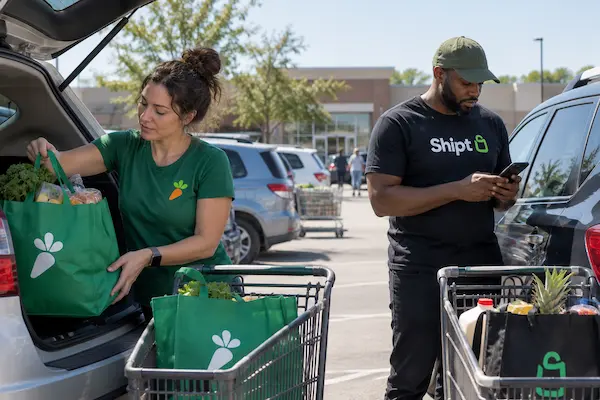
Both companies classify full service shoppers as independent contractors. That means you receive a 1099 tax form (the IRS form for non employee income) instead of a W-2. You cover your own gas and car costs, and you set your own hours. The similarities end there. The table compares the points that shape your day.
| Criterion | Instacart | Shipt |
|---|---|---|
| Minimum age | 18 | 18 |
| Vehicle | Required for delivery role | Reliable, insured vehicle |
| Pay model | Batch pay plus tips | Base pay plus tips and bonuses |
| How orders arrive | On demand in the app | Offers, often on set hours |
| In store only option | Yes, hourly employee role | Not the standard role |
| Extra perk | Fast cash out option | Free Shipt membership if active |
Shipt’s shopper page states the age, license, Social Security number, insured vehicle, 50 pound lifting and smartphone requirements directly. Instacart’s sign up page lists the same age and vehicle rules for its full service role. That summary comes from the gig work guides Gridwise and Everlance. Both run a background check before you can accept work.
A list of rules tells you whether you can join. It does not tell you what the work feels like, which is what the next section is for.
What a week looks like on each app
A week on Instacart is reactive, with orders appearing when demand spikes. A week on Shipt is more planned, with shoppers setting availability and building repeat customers.
Illustrative example: a shopper with two free mornings and a free Saturday. On Instacart, she opens the app and sees a list of batches. She picks the ones with the best pay for the distance and stops when the list dries up. Some hours are busy, others are empty. On Shipt, she marks her hours in advance and receives offers that match them. She often sees the same customers again, which tends to raise tips over time.
Neither pattern is better in general. If your free time is unpredictable, Instacart’s on demand feed suits you. If you can commit to blocks of time and enjoy service, Shipt’s model rewards that consistency. Many shoppers run both apps and switch based on which one is paying more that day.
⚠️ Keep in mind: as a contractor you owe self employment tax on your net earnings. Track mileage from day one and confirm the rules with the IRS or a tax professional.
The pattern of orders matters less than what each order pays. Here is how the two apps build a payout.
Shipt vs Instacart pay: how each app calculates earnings
Shipt pays base pay for each order based on estimated time and effort, plus customer tips and occasional bonuses. Instacart pays a batch amount per order plus tips.
Shipt’s own shopper page describes the three parts of a payout. Base pay (called offer pay) reflects the estimated time and effort of the delivery. Customer tips come on top, plus extra earning opportunities such as promotions. Instacart’s full service shoppers earn batch pay, which combines the order size, item count and distance, plus customer tips. Instacart’s in store shoppers are part time employees who earn an hourly wage and do not deliver.
Because both models depend on order size, distance and tips, no honest guide can promise an hourly figure. What you can control is the mix of orders you accept. These are the factors that move earnings most on either app:
One more difference: Shipt states that active shoppers who complete at least one shop every 90 days receive a free Shipt membership. It is a small perk if you also order groceries. Ready to try one or both? The sign up process is nearly identical, and the steps are next.
How to sign up for Instacart or Shipt step by step
You need to be at least 18, hold a valid U.S. driver’s license, have access to an insured vehicle and be able to lift about 50 pounds.
- 1Download the shopper app from the official app store: Instacart Shopper or Shipt Shopper, never a third party file.
- 2Create your account with your legal name, phone, email and the city where you plan to shop.
- 3Upload your documents: driver’s license, proof of insurance and, for Shipt, your Social Security number.
- 4Consent to the background check and wait for the result, which can take a few days depending on your area.
- 5Finish the onboarding, including training videos and, on Shipt, any required interview or quiz.
- 6Set up payment and insulated bags, then accept a small first order to learn the app before chasing large batches.
Common mistakes: applying in a market with a waitlist and giving up instead of checking back, or skipping the mileage log in the first week. Another is accepting far away orders that pay well on paper but lose money on gas. If your application is rejected, both companies allow you to dispute background check errors through the screening provider named in the email.
Frequently asked questions about Shipt or Instacart
These are the questions people ask most when choosing between the two apps.
Shipt or Instacart: which pays more?
Neither app publishes a fixed hourly rate, and earnings depend on your market, order sizes, distance and tips. Shipt’s base pay reflects time and effort per order; Instacart’s batch pay reflects order size and distance. Try both for two weeks and compare your own numbers.
Can I work for Instacart and Shipt at the same time?
Yes. Both treat full service shoppers as independent contractors, so there is no exclusivity. Many shoppers keep both apps open and take whichever order pays better for the time and distance.
Do I keep 100 percent of my tips on Shipt and Instacart?
Shipt states that shoppers receive customer tips on top of base pay, and Instacart pays tips on top of batch pay. Check the current tip policy inside each shopper app, because terms can change.
DoorDash vs Instacart: is restaurant delivery easier than grocery?
Restaurant delivery involves less shopping time and lighter loads, while grocery orders take longer but often pay more per order and tip better. Many drivers run DoorDash for short evening runs and Instacart or Shipt for larger daytime orders.
Do I need my own car to shop for Instacart or Shipt?
For delivery, yes, you need access to a reliable, insured vehicle. Shipt notes you do not have to own it as long as you are on the insurance policy. Instacart’s in store shopper role needs no car because it does not deliver.
How fast do Instacart and Shipt pay shoppers?
Both run a regular weekly payout, and both offer a faster cash out option for a small fee or under certain conditions. The exact timing and fee are shown in the earnings section of each shopper app.
More gig work guides on this site
Choosing between Instacart and Shipt is only the first decision in gig work. This site covers the ones that follow in the same practical tone.
Our productivity section explains how to calculate a delivery driver’s real net pay after gas, wear and taxes. It also covers the car insurance delivery drivers actually need and how to keep mileage records that hold up at tax time. Each guide is written for someone reading between orders, with the answer first and the steps in order.
The rules do not change from page to page: numbers come with a named source, nothing is promised, and when a company’s policy can change we tell you to confirm it inside the app. A comparison should help you decide, not sell you an app.
Apply to both and let the orders decide
The Instacart vs Shipt question rarely has a single winner. The practical move is to apply to both and let two weeks of real orders tell you which fits.
Start with the app that is active in your area, learn the stores, and keep a simple log of hours, miles and pay. When the second app approves you, run it side by side. The numbers in your own log will beat any general ranking, including this one.
Keep this guide open while you sign up and check the requirements list once more before uploading documents. Treat your first week as training rather than a verdict.
ℹ️ Important: en.amucc.com.br is an independent site, not affiliated with Instacart, Shipt, DoorDash or any company mentioned. Requirements, pay models and perks change; confirm them on each company’s official shopper page before applying. This is not tax advice.